A bit over a decade ago, I worked my last few shifts in a fruit shop in Adelaide’s Central Market before packing up my Magna and driving to Sydney. When I arrived, the only person I knew in town was my girlfriend, now wife, who had reluctantly moved there with me.
My first job was setting up graduation ceremonies at Sydney Uni, before working a couple of months as a recruiter on minimum wage. All the while, I was scrounging for work in progressive policy and political change. After six months, I got lucky to find a job at an organisation called the McKell Institute.
I didn’t know then, walking into a very humble office replete with hand-me-down computers from some ancient Labor campaign, that I’d stick around for the next decade. I certainly didn’t expect that, in April 2023, I’d be invited by our board to take over the role of CEO.
It has been a remarkable opportunity to lead this organisation. We have achieved a lot in three years.
However, I have decided that I will be stepping down from the role of CEO early in the new Financial Year.
It’s a tough call, but the right one, taken for a few reasons.
Being based in Adelaide, I’ve spent a lot of the past three years on the road. Multiple laps of the country, dozens of Sydney trips per year. A couple hundred flights all told. More recently, that has resulted in me spending too much time on Facetime calls with my boy since he was born than I’m comfortable with.
McKell is also in good shape, with the wind in its sails, so now is the best time for a smooth transition.
And, there is another motivator.
Those who know me well realise I’m much more at home in the field than in the boardroom; that I prefer solving problems than talking about them. And in a moment of profound political upheaval, with all the opportunity that brings, I want my focus and time to be spent on ideas and outcomes, not management and fundraising.
So, with all that in mind, it’s time for a change - to spend more time in my hometown, but also dedicate myself wholly to the issues and projects I’m most passionate about.
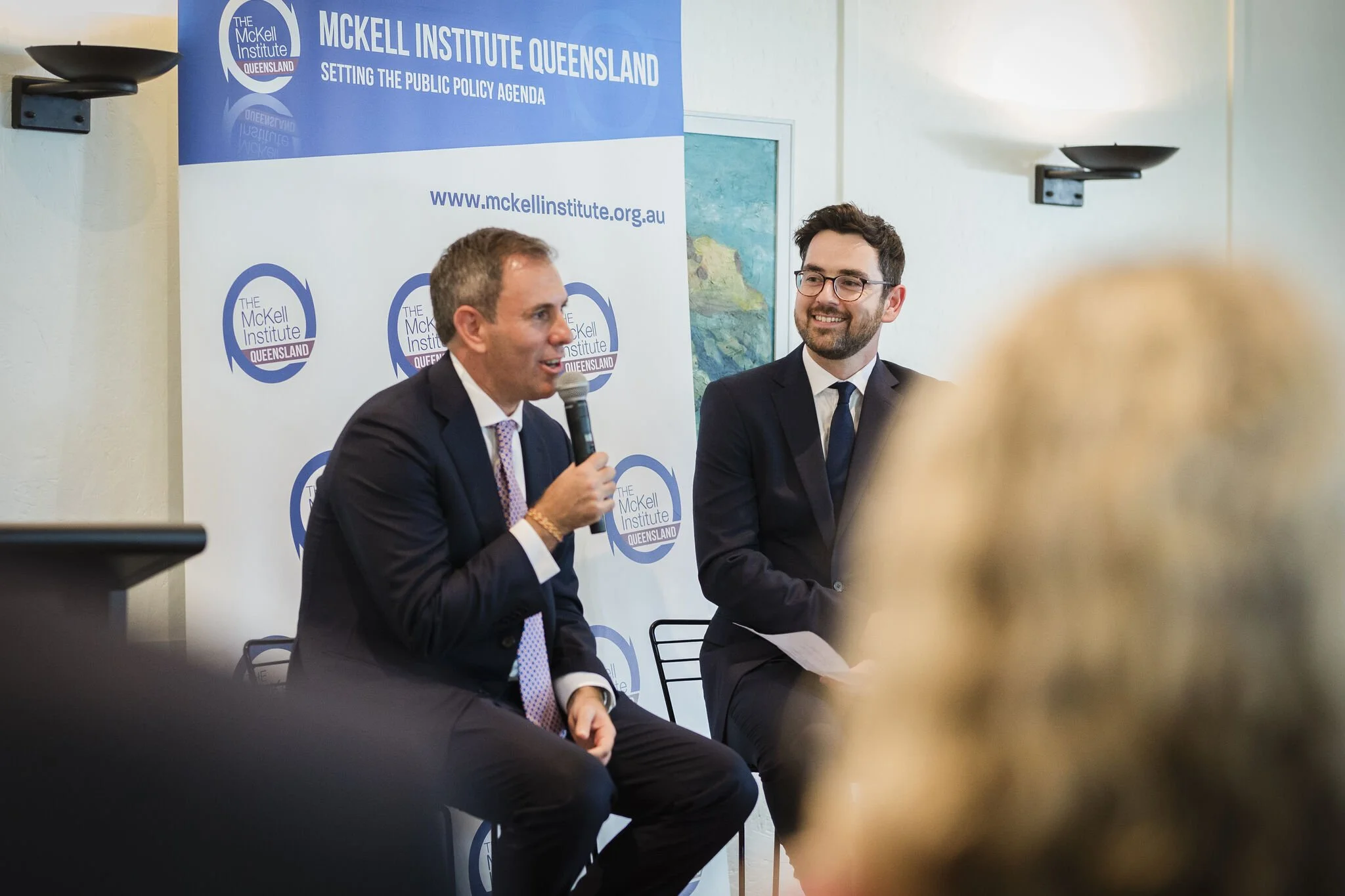
With Federal Treasurer Jim Chalmers, 2024.
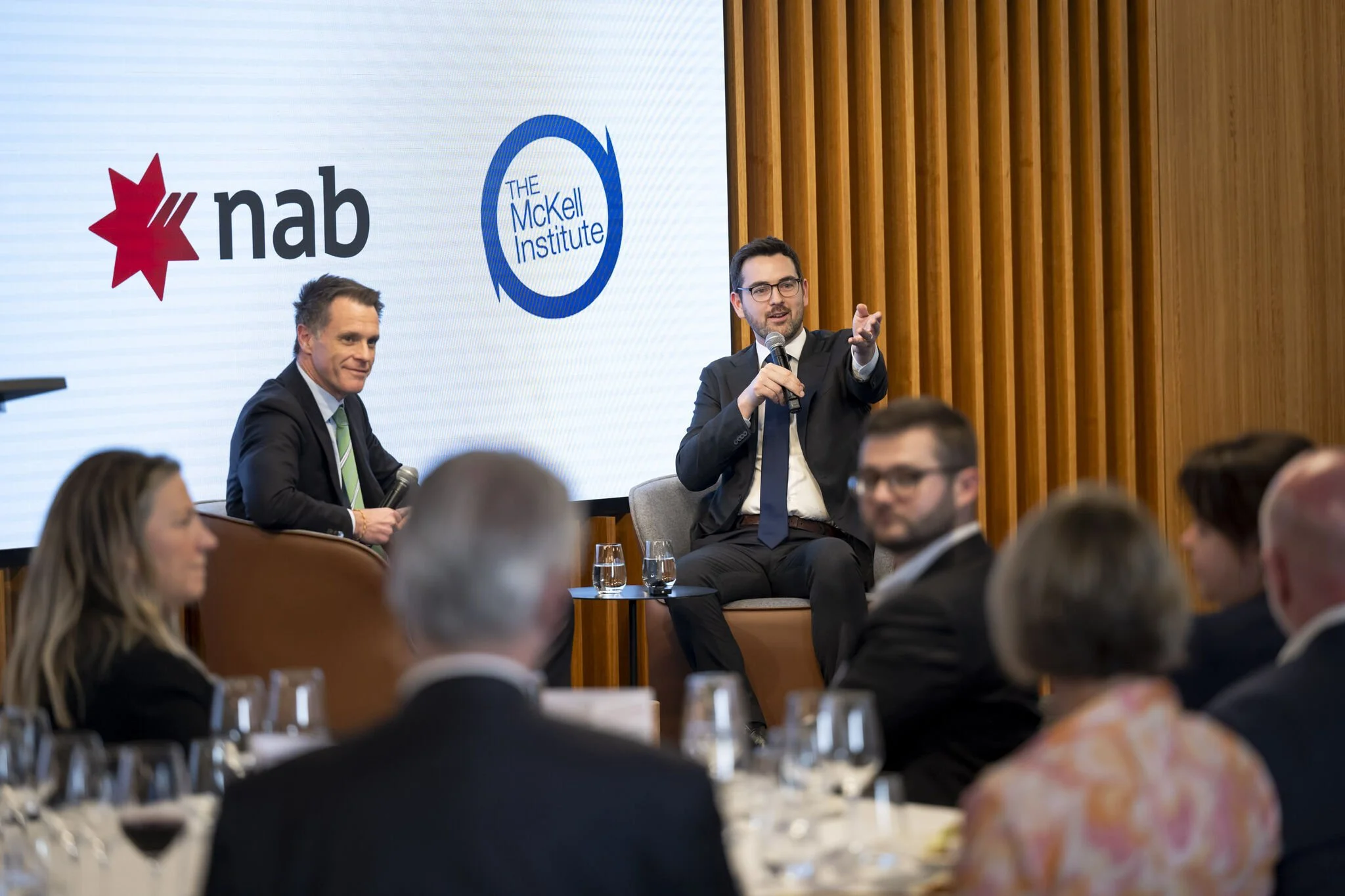
With NSW Premier, Chris Minns, 2025.
3 YEARS OF GROWTH & EXPANSION
When I was invited to take on the role in April 2023, I outlined a clear set of objectives: We needed to make policy impact. But we also needed to evolve, and seize the moment of political change to entrench McKell into our national progressive-policy architecture.
On the organisational front, I committed to expand the Institute’s presence; scale its capacity, membership and revenue; modernise its internal structures; invest in our team and professionalise salaries; and to link our organisation with its international progressive peers.
While there’s always more to do, those objectives have largely been realised:
We opened McKell Institute SA/NT, bringing the Institute to my hometown.
We opened McKell Institute Western Australia.
We appointed our first Chief Economist, who has secured our first appearance at the National Press Club in June.
We strengthened our governance, bringing in a new Chair, adding Victoria’s longest-serving Treasurer to our national board, and establishing new advisory committees in WA and SA.
We deepened links between McKell and two esteemed foreign think tanks — Progress (UK) and PPI (US) — allowing idea sharing and policy collaboration across ecosystems.
We revived our US Program, and inaugurated our UK Program, bringing McKell members to the White House and Downing St.
Meanwhile, we grew — achieving our FY27 targets a year early, with that growth flowing through to improved salaries for my colleagues.
Three years after my appointment, it is satisfying that the McKell Institute is now truly a national organisational. We have a physical footprint, events program, locally-informed policy agenda, membership and network spanning every Australian jurisdiction, relationships in every parliament, and are plugged into a global ecosystem of progressive policy advocates and thinkers.
Premier Roger Cook launching McKell Institute Western Australia, 2025.
Leading McKell’s UK Delegation to Downing St, 2025.
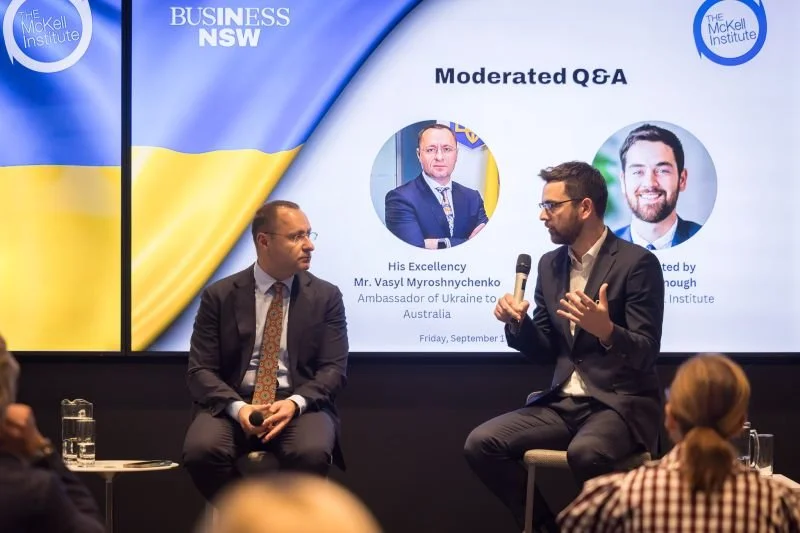
With Ukrainian Ambassador to Australia, Vasyl Myroshnychenko, 2024.
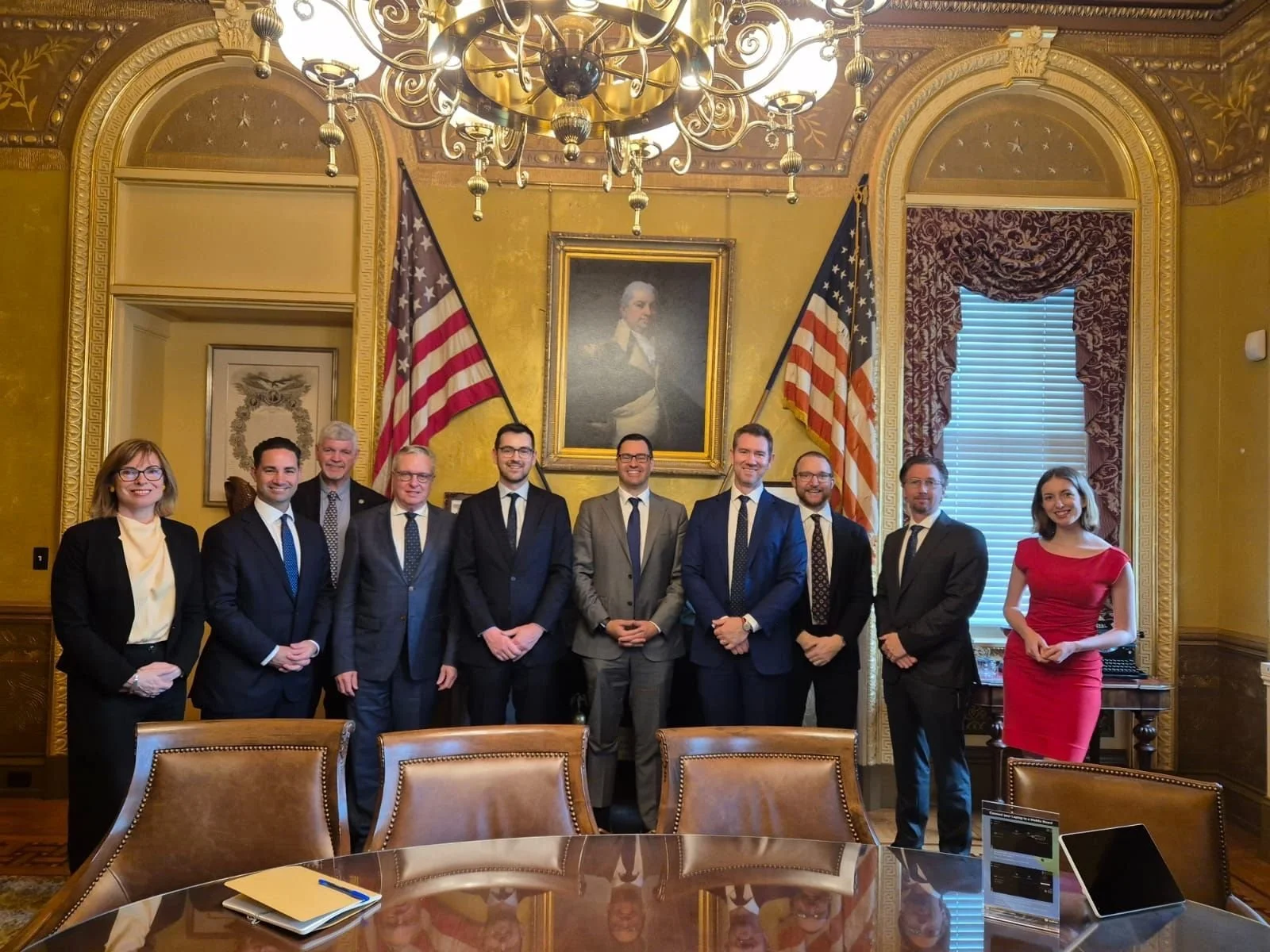
With Ben LaBolt, President Biden’s Communications Director, in the White House Executive Office Building, 2024.
OUR POLICY IMPACT HAS GROWN
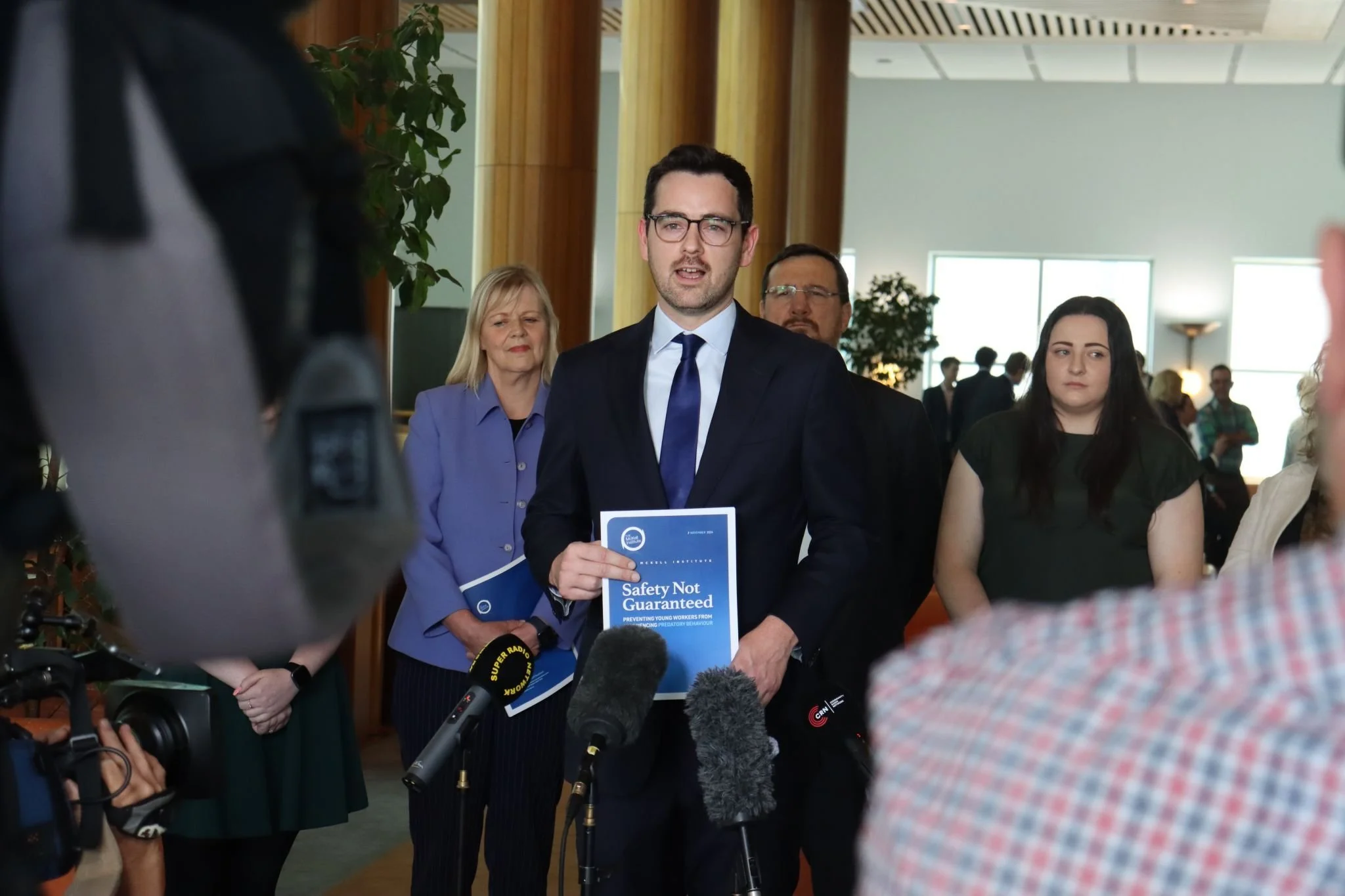
Launching Safety Not Guaranteed in Parliament House, 2024.
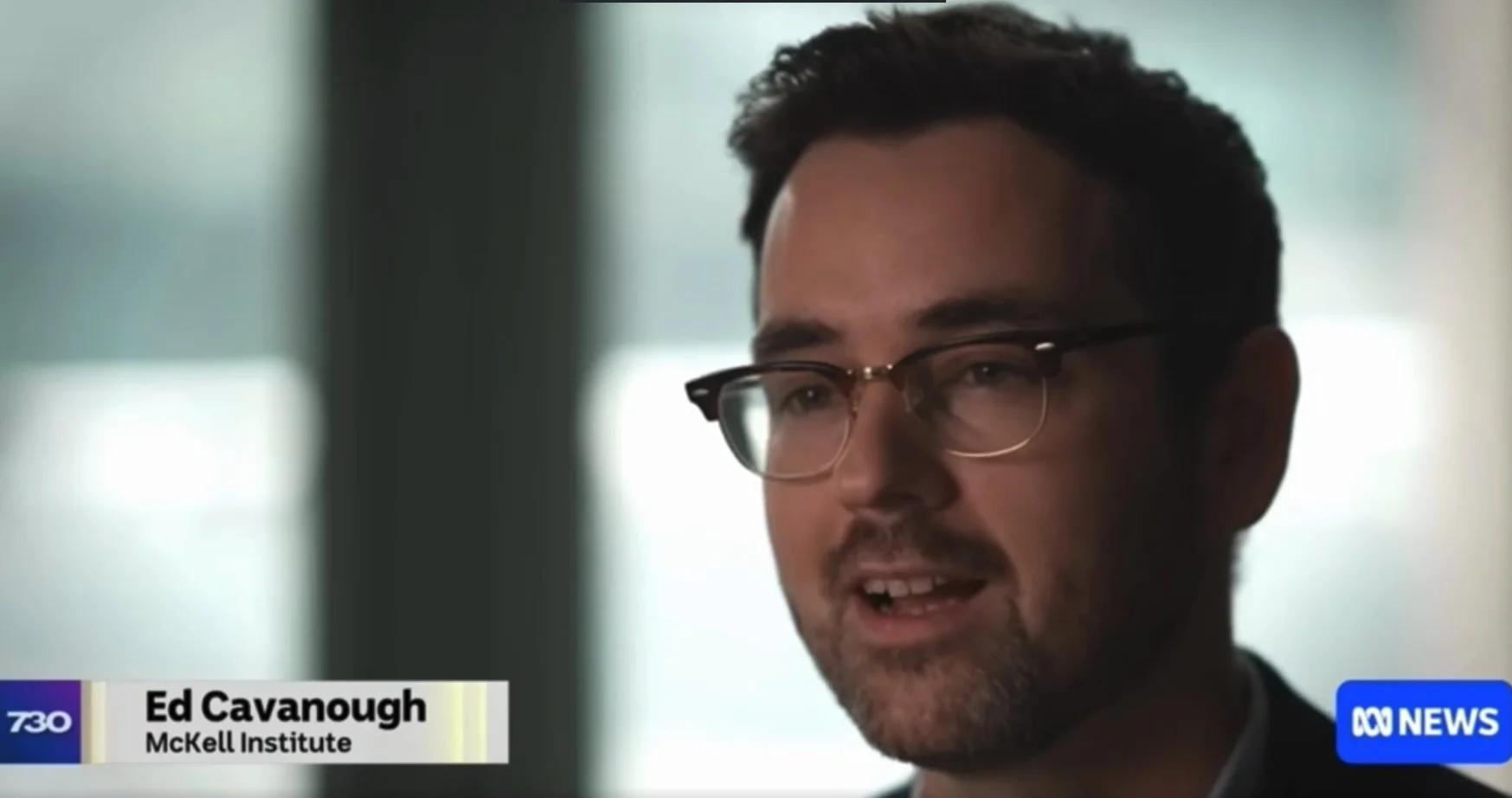
Discussing CGT refrom on ABC’s 730. 2026.
But while organisational growth is important, impact is more so.
I continue to aspire for the Institute to shape public policy outcomes, not just public policy discourse. Think tanks shouldn’t find satisfaction in the appearance of influence, only in the material consequences of it.
On that front, our record is strong, too:
Nationally, we elevated the CGT debate, proposing a disruptive, new model that brought along traditional adversaries to change; we informed government interventions in Whyalla and the smelting industry; early childhood education and care; non-compete clauses, and more.
In New South Wales, we informed a generational investment in social housing; brought business and unions together around key-worker housing, saw our toll relief and domestic manufacturing proposals entrenched; and convinced the NSW Government to establish its first ever Rare Disease strategy.
In South Australia, we secured commitments to make renting fairer; provided the evidence base for a major pay increase for allied health workers, and won hosting rights for the Budget Lunch, the premier government-corporate forum on the state political calendar.
In Queensland, we won a major commitment from the government to expand funding for mental health support, while maintaining productive working relationships with the new government following Labor’s loss in 2024.
In Victoria, we continued our work on wage theft reform with our union partners, a debate that led to its eventual criminalisation, while welcoming the state’s longest serving Treasurer as Chair of our Victorian board.
In Western Australia, we launched our Inclusive Prosperity series, helping establish a new policy vehicle for debate and discourse in the West, while working with locally-based partners on early childhood education reform.
In Tasmania, we made inroads in public transport policy, influenced law changes protecting retail workers alongside our union partners, and pressured the government to lift public sector wages, helping fill a gap in policy discourse in our smallest state.
Even internationally, our policy on small-scale energy for communities in the Pacific, adopted by Labor at the 2022 election, has proliferated, leading to millions of investment into off-grid clean energy in our region.
Explaining McKell’s CGT reform package.
Explaining the Whyalla Intervention.
Detailing the Albanese Government’s workplace reform agenda.
Arguing for lower income taxes on working Australians.
SEIZING THIS MOMENT OF PROGRESSIVE OPPORTUNITY
Progressive parties everywhere are struggling to harness this period of political volatility to achieve electoral dominance while delivering for people. Too often, we see this moment as a poor time for incumbents. We justify inaction citing the complexity of our times, rather than seeing this age of disruption as the fertile ground for progressive reform that it is.
Where left of center parties hold power, they often struggle to communicate a story, long-term purpose, and a cohesive policy agenda that delivers tangible dividends to those otherwise attracted to populists. We’re adept at putting out spot fires, but not so good at clearing the tinder that fuels them.
At the same time, our institutions are creaking. Norms are being scythed. Demographics are changing. The temperature is rising. This period, the most complex and disruptive in my life, demands the most innovative and strategic policy thinking and argument.
To this end, I’m excited to be continuing in a new role at the Institute, leading on these heady questions, while managing our partnerships with those abroad navigating the same challenge.
I’m grateful for those who made this progress possible — Our state Executive Directors: Sarah Mawhinney, Rebecca Thislteton, Hannah MacLeod and Jess Bukowski; our internal team: Marni Lefebvre, Annika Rees, Anya Maasen-Glasgow, and Tom Probst; our former staff: Jesse Thomas, Gem Beale, and Max Douglass; our entire board led by Dan Walton; and my predecessors who left a brilliant foundation on which to build: Sam Crosby, Michael Buckland, and Peter Bentley.
The McKell Institute has been my professional home for over a decade.
I’m privileged to have had the chance to lead it.
I’m excited about what’s to come.